





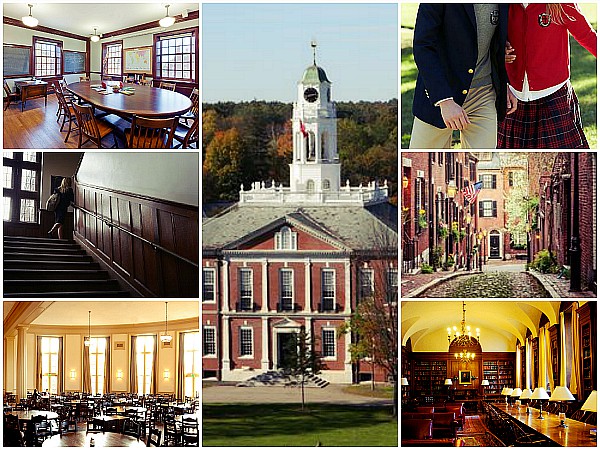
Salem Witches Institute is home to young witches and wizards from the New England area (Massachusetts, Maine, Vermont, New Hampshire, New York, Connecticut, Rhode Island, Pennsylvania, New Jersey, Delaware, Maryland, DC). It was founded in 1639 and was the first wizarding school in America.
Salem was originally an all-female academy. This was done because the girls in the Puritan community did not receive any schooling and were far more likely to be persecuted by muggles than their male counterparts, and thus deserved a school all their own. This policy lasted only until the outbreak of the Salem Witch trials in 1695. It then opened to all magical students (including Native Americans and any other magical children in the area).
The school continued to expand as immigrants flooded rapidly growing cities such as New York and Boston. Salem quickly found itself moving beyond the one manor house that had originally been expected to contain all of the students and faculty. The school played a notable role in the American Revolution as a hiding place for New England rebels on the run from Redcoats, and claims (correctly or not) that several prominent figures in the war were among its alumni. It memorably staged its own Tea Party in the Salem Harbor, while 'fireworks depicting a cackling witch on a broomstick chasing King George danced through the sky above'.
The Institute is located near the coastal city of Salem, Massachusetts. Heavily shielded from the muggle public and notoriously difficult to locate, even by fellow wizards, the school is said to be located on a hill overlooking the city and harbor. Secret underground tunnels connect the Institute to downtown Salem, and are frequently used by older students to visit the muggle community. During the autumn season, the school eases up on its strict rules of secrecy and allows students to visit Salem more freely, so long as they pass themselves off as 'witch enthusiasts' rather than actual witches.
Dormitories are co-educational, although floors and rooms are single-sex. Salem does not appoint prefects but rather has an established Student Council, and each year elects its representatives at the beginning of the term, typically one male, one female. There are two seventh-year Head Students chosen by the faculty. Faculty and students dine together for meals in the main building, Goode Hall. Students are frequently put to work in the kitchens or cleaning, as the staff still uphold the New England ideal of 'idle hands are the devil's playthings'.
Goode Hall is the administrative building (containing the headmistress' office), library, hospital wing, and dining hall. Classes are taught in Nurse Hall, Martin Hall, and Wildes Hall, all named after victims of the Salem Witch trials, which make up the outer circle of the campus, with the dormitory buildings and commons within the center. A prominent statue of Tituba, the slave (now thought to be an indigenous woman from modern day Venezuela) used as the initial scapegoat during the Trials, marks the exact center of campus. The bronze statute depicts Tituba demonstrating her magic to several curious young Puritan girls, with the inscription: Only wisdom can extinguish fear and hatred in the heart of man.
Salem was originally an all-female academy. This was done because the girls in the Puritan community did not receive any schooling and were far more likely to be persecuted by muggles than their male counterparts, and thus deserved a school all their own. This policy lasted only until the outbreak of the Salem Witch trials in 1695. It then opened to all magical students (including Native Americans and any other magical children in the area).
The school continued to expand as immigrants flooded rapidly growing cities such as New York and Boston. Salem quickly found itself moving beyond the one manor house that had originally been expected to contain all of the students and faculty. The school played a notable role in the American Revolution as a hiding place for New England rebels on the run from Redcoats, and claims (correctly or not) that several prominent figures in the war were among its alumni. It memorably staged its own Tea Party in the Salem Harbor, while 'fireworks depicting a cackling witch on a broomstick chasing King George danced through the sky above'.
The Institute is located near the coastal city of Salem, Massachusetts. Heavily shielded from the muggle public and notoriously difficult to locate, even by fellow wizards, the school is said to be located on a hill overlooking the city and harbor. Secret underground tunnels connect the Institute to downtown Salem, and are frequently used by older students to visit the muggle community. During the autumn season, the school eases up on its strict rules of secrecy and allows students to visit Salem more freely, so long as they pass themselves off as 'witch enthusiasts' rather than actual witches.
Dormitories are co-educational, although floors and rooms are single-sex. Salem does not appoint prefects but rather has an established Student Council, and each year elects its representatives at the beginning of the term, typically one male, one female. There are two seventh-year Head Students chosen by the faculty. Faculty and students dine together for meals in the main building, Goode Hall. Students are frequently put to work in the kitchens or cleaning, as the staff still uphold the New England ideal of 'idle hands are the devil's playthings'.
Goode Hall is the administrative building (containing the headmistress' office), library, hospital wing, and dining hall. Classes are taught in Nurse Hall, Martin Hall, and Wildes Hall, all named after victims of the Salem Witch trials, which make up the outer circle of the campus, with the dormitory buildings and commons within the center. A prominent statue of Tituba, the slave (now thought to be an indigenous woman from modern day Venezuela) used as the initial scapegoat during the Trials, marks the exact center of campus. The bronze statute depicts Tituba demonstrating her magic to several curious young Puritan girls, with the inscription: Only wisdom can extinguish fear and hatred in the heart of man.
